Infolinks In Text Ads

Saturday, August 10, 2013

SOHNI AND MAHIWAL- (LOVE STORY)

Going back in history, the Arab Bedouins had Layla and Majnun and the Persians Shirin and Farhad; the French had Abelard and Heloise and the Italians Romeo and Juliet. We in Pakistan have more than our share of love tales: Heer-RanjhaSohni-Mahiwal and Mirza-Sahiban in Punjab, Sassi-Punnu and Umar-Marvi in Sindh (and partly Balochistan), and Adam Khan and Durkhanai in Swat, NWFP.Folklore is a mixture of beliefs, facts and fiction. Over time, the different elements get so interwoven with each other that often it becomes difficult to separate one from the other. The stories are told and retold by successive generations, embellished by poets, sung and celebrated by common folks and enacted and filmed by entertainment industry.
It is always a poet, though, who immortalizes a love story. But it is also true that a poet chooses to sing a particular story, and not the other, because of its inherent beauty and poignancy. While the Persian poet, Nizami, introduced Layla-Majnun to the world, Shakespeare immortalized Romeo and Juliet.Waris Shah cried a river over Heer and made her a household name in Punjab and Sohni and Mahiwal first captured the imagination of Fazal Shah and, through his poetry, got embedded in popular imagination in the region that is now Pakistan and beyond.Even though Sohni and Mahiwal lived, loved and died, relatively recently there is no one consistent account of their story. There are numerous versions. However, there is common thread that runs through all the different versions.
Sifting through different accounts and glossing over the ones that sounded too mythical, here is, briefly, what I could gather of this beautiful and enduring story:
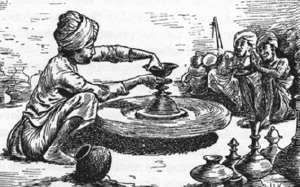
Sometime during the late Mughal period there lived in a town on the banks of River Chenab, or one of its branches, a potter (kumhar) named Tulla. The town has been identified either as present day Gujrat or one of the nearby towns. Tulla was a master craftsman and his earthenware were bought and sold throughout Northern India and even exported to Central Asia. To the potter and his wife was born a daughter. She was such a beautiful child that they named her Sohni (meaning beautiful in Punjabi).
Sohni spent her childhood playing and observing things in her father’s workshop. She watched pots being made from clay and shaped on the wheel, dried in the sun and then fired and baked in the furnace. Sohni grew up to be not only a beautiful young woman but also an accomplished artist who made floral designs on the pots and pitchers that came off her father’s wheel.
Sohni’s town was located on the trading route between Delhi and Central Asia and trading caravans passed through it. One such caravan that made a stopover included a young handsome trader from Bukhara, named Izzat Baig. While checking out the merchandize in the town Izzat Baig came upon Tulla’s workshop where he spotted Sohni sitting in a corner of the workshop painting floral designs on the earthenware.
Izzat Baig was immediately taken by Sohni’s rustic beauty and charm and couldn’t take his eyes off her. In order to linger at the workshop he started purchasing random pieces of pottery as if he were buying them for trading. He returned the next day and made some more purchases at Tulla’s shop. His purchases were a pretext to be around Sohni for as long as he could. This became Izzat Baig’s routine until he had squandered most of his money.
When the time came for his caravan to leave, Izzat Baig found it impossible to leave Sohni’s town. He told his companions to leave without him and that he would follow later. He took up permanent residence in the town and would visit Sohni at her father’s shop on one pretext or the other. Sohni also began to feel the heat of Izzat Baig’s love and gradually began to melt, so to speak. The two started meeting secretly.
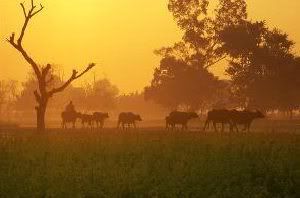

Izzat Baig soon ran out of money and started taking up odd jobs with different people including Sohni’s father. One such job was that of grazing people’s cattle - buffaloes. Because of his newfound occupation people started calling him Mahiwal: a short variation of MajhaNwala or the buffalo-man. That name stayed with him for the rest of his life and even after.
Sohni and Mahiwal’s clandestine meetings soon became the talk of the town. When Sohni’s father came to know about the affair he hurriedly arranged Sohni’s marriage with one of her cousins, also a potter, and, against Sohni’s protests and entreaties, bundled her off to her new home in a village somewhere on the other side of the river.
When Mahiwal came to know of Sohni’s marriage he was devastated. He left town and became a wanderer searching for Sohni’s whereabouts. Eventually he found her house and managed to meet her in the guise of a beggar and gave her his new address - a hut across the river. Sohni’s husband, meanwhile, had discovered that he could not win Sohni’s heart no matter what he did to please her and started spending more time away from home on business trips. Taking advantage of her husband’s absence Sohni started meeting Mahiwal regularly.
She would swim across the river at night with the help of a large water pitcher (gharra), a common swimming aid in the villages even today. They would spend most of the night together in Mahiwal’s hut and before the crack of dawn Sohni would swim back home. She would hide the pitcher in a bush for her next trip the following night. One day, Sohni’s sister-in-law (her husband’s sister) came visiting. Suspecting something unusual about Sohni’s nocturnal movements, she started spying on her. She followed Sohni one night and saw her take out the pitcher from the bush, wade into the river and then swim across. She reported the matter to her mother (Sohni’s mother-in-law) and both of them, rather than informing Sohni’s husband, decided to get rid of Sohni. This, they believed, was the best way to save the family from infamy.
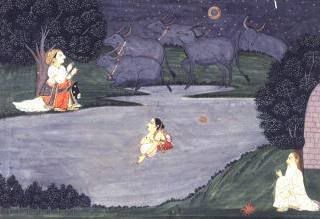
The sister-in-law secretly took out the pitcher from the bush and replaced it with one that was not baked but only sun-dried. As usual, Sohni got out at night for her meeting with Mahiwal, picked the pitcher from the bush, as she always did, and entered the river. It was a stormy night and the river was in flood. Sohni was soon engulfed in water and discovered, to her horror, that her pitcher was an un-baked one that would soon dissolve and disintegrate.
What shall she do now? Abandon the trip and go back or continue trying to swim without the pitcher and drown? Her inner struggle at this point - her fear of not being able to make the trip and thus not living up to the test of true love, her hope of making it, somehow, with the help of the pitcher - are best expressed in the song made memorable by Pathana Khan in his inimitable voice: Sohni gharray nu aakhdi aj mainu yaar mila gharrya.
Roughly translated and paraphrased the song runs as follows:
Sohni, addressing the pitcher:
It’s dark and the river is in flood
There is water all around.
How am I going to meet my Mahiwal?
If I keep going I will surely drown
And if I turn back
I wouldn’t be living up to my promise to Mahiwal
I beg you, with folded hands,
Help me cross the river and meet my Mahiwal.
You always did it. Please do it tonight, too.

The pitcher replies:
I wish I were baked in the fire of love like you are
But I am not. Sorry, I am helpless.
Hearing Sohni’s cries for help, Mahiwal also jumped into the river to save her. As the story goes, their bodies were washed ashore and found next day lying next to each other.
With their death Sohni and Mahiwal moved into the world of legends and lore. In their death the sinners became saints.
Mast Qalandar dabbles in everything - history, culture, education, poetry, armchair politics and, when sufficiently provoked, religion. He has lived mostly in Karachi, Lahore, Islamabad and Peshawar and also in several nooks and crannies of Pakistan. Currently he divides his time between Islamabad and New York.

HEER ND RANJHA- (LOVE STORY)

Some themes are culturally bound, others transcend boundaries and remain timeless. The story of tragic love is one such theme. Just as in the west Shakespeare’s Romeo and Juliet epitomises young-love-thwarted, in the Indian Subcontinent it is symbolised by the story of Heer and Ranjha.

Heer Ranjha by the famous Pakistani artist Chugtai
Heer Ranjha is a traditional folk story of the Punjab that has become part of the Indian Subcontinent cultural heritage. Beloved by Indians and Pakistanis alike, the story has many narrative versions, but the one that has remained most popular is Waris Shah’s poetic epic Heer, which was written in 1766. A tale of two young lovers Heer and Ranjha, it recounts how Ranjha, forced to flee his ancestral home and village because of cruel treatment by his jealous sisters-in-law, falls in love with Heer at first sight.

Mesmerized by his flute playing, she hires him as a cow herder on her father rich estate. They begin meeting secretly, but Heer uncle Qaido discovers them and in an effort to avoid any shame, the family hastily arranges Heers marriage to a wealthier, older man. With great difficulty and after much suffering, Heer eventually obtains her parents consent to marry Ranjha. Her uncle, however, cannot accept her disobeying the strictures of a patriarchal society that emphasised parental choice in marriage. Believing that by falling in love she has destroyed the family honour, he poisons her on what would have been the lover’s wedding day. Ranjha arrives too late to save her and commits suicide.

Clear parallels exist between the tragedy of Romeo and Juliet and that of Heer Ranjha. Shakespeare and Waris Shah both explore the issue of whether marriage should be based on love or parental choice. Both narratives are stories of a young love so all consuming that the lovers would rather die than live without each other. In both instances it is the young girls, Juliet and Heer, who display greater strength and maturity in love. The tragedies of these young lovers are so powerful that, although not allowed to be couples in real life, their names have been forever linked together.

Bollywood film poster (2009).
The story of Heer Ranjha has been the subject of several films in India and Pakistan. The earliest film version was made in pre-Partition India in 1928 and the latest is the 2009 Bollywood production Heer Ranjha. With the continuing popularity of the tragedy, there have also been some recent theatrical productions that have modernised the traditional folk story to make it relevant to today’s world. In 2008, a British Asian production Heer Ranjha set the tragedy in Glasgow, Scotland. Ranjha is portrayed in this version as a muslim restaurant worker who is disaffected and disowned by his faith. Attempting to commit suicide by jumping off a bridge, he falls instead into the boat where Heer, the daughter of a curry-magnate, is holding a party. The play discussed the issues of forced marriages and the sectarian divide in South Asian communities. In Karachi, Pakistan, a 2009 production Ranjha and Juliet innovatively fused both Shakespeare’s and Waris Shah’s tragedies to come up instead with a comedy. The play cleverly explores the question of whether these two couples, immortalized as tragic lovers, would still fall in love in today’s world – if their love is really eternal. As a commentary on our multi-cultural world, and with some mischievous meddling by the devil and cupid, the couplings, however, get mixed up.

The story of Heer Ranjha is believed to be based on the real life story of a remarkable young woman named Heer who took a stand not only for love, but also against the cruelty of the feudal system. Although Juliet and Heer both loved and lost, they have become a symbol of true love. Heer’s grave in Jhang, Punjab, has become a site for young girls in love to visit, where praying for the successful outcome of their love they leave their bangles as an offering. Juliet’s balcony in Verona, Italy, although doubted as actually hers, has become a traditional tourist spot on a tour of Italy and Verona itself has become a romantic wedding destination for many couples.

Heer Ranjha (Punjabi: ਹੀਰ ਰਾਂਝਾ, ہیر رانجھا, hīr rāñjhā) is one of the four popular tragic romances of the Punjab. The other three are Mirza Sahiba, Sassi Punnun and Sohni Mahiwal. There are several poetic narrations of the story, the most famous being 'Heer' by Waris Shah written in 1766. It tells the story of the love of Heer and her lover Ranjha. The other poetic narrations were written by Damodar Daas, Mukbaz and Ahmed Gujjar among others.
Guru Gobind Singh Ji also reffered to heer ranjha in his composition called charitropakhyan.


Heer ranjha Painting
Heer Saleti was an extremely beautiful woman, born into a wealthy Jatt family of the Sayyal clan. Ranjha (his surname), his first name was Dheedo, also was a Jatt. He was the youngest of four brothers and lived in the village 'Takht Hazara' by the river Chenab. Unlike his older brothers who had to toil in the fields, young Ranjha had been doled over by his, becoming his father's favorite son. With the work being handled his father allowed him to lead a life of ease playing the flute ('Wanjhli'/'Bansuri'). After a quarrel with his brothers over land, Ranjha left home.
In Waris Shah's beloved version of the epic, Ranjha left his home because his brothers' wives refused to give him food. Eventually he arrives in Heer's village and falls in deeply in love with her at first sight. Heer offers Ranjha a job as caretaker of her father's cattle. Soon, mesmerised by the way Ranjha plays his flute, she eventually falls in love with him. They met each other secretly for many years until they were caught by Heer's jealous uncle, Kaido, and her parents Chuchak and Malki. So Heer, to save the 'honor' of her family, is forced by her family and the local priest or 'mullah' to marry another (rich, respected, older local man) named Saida Khera who lived in a distant village.
Ranjha is heartbroken. He is left to walk the quiet villages on his own until eventually he meets a 'Jogi' (an ascetic) named Baba Gorakhnath, who happens to be the founder of the "Kanphata" (pierced ear) sect of Yogis. Their meeting was at 'Tilla Jogian' (the 'Hill of Ascetics'), located 50 miles north of the historic town of Bhera, Sargodha District, Punjab, India; which since the farengis (the British) partitioned India (dividing the former kingdom of Maharaja Ranjit Singh) has been part of (Pakistan)). The heart-broken Ranjha decided to become a Jogi, piercing his ears and renouncing the material world. Reciting the name of the Lord, "Alakh Niranjan", as he traveled around the Punjab, he eventually finds the village where he is reunited with Heer.
The two returned to Heer's village, where Heer's parents agreed to their marriage. However, on the wedding day, Heer's jealous uncle Kaido had arranged for one of his servants to lace some sweets, that Ranja had sent to Heer, with a deadly poison, such was his jealousy that he would rather have her die than she her happily married to Ranja. Being told what Heer's uncle had done, Ranjha rushed to save Heer, but he was too late, as several pieces of the Laddu were missing and Heer breath her last just as he arrived. Brokenhearted once again, Ranjha finished the poisoned Laddu (a sweet) laying down to die by her side.
Heer and Ranjha are buried in a Punjabi town called Jhang, Punjab. Lovers and others often pay visits to their mausoleum.
Waris Shah's version


Waris Shah
It is believed that the story of Heer and Ranjha had a happy ending but Waris Shah gave it the sad ending described above, thereby giving it the legendary status it now enjoys. It is argued by Waris Shah in the beginning of his version that the story of Heer and Ranjha has a deeper connotation - the relentless quest of man (humans) for God.

Full Story

Waris Shahs composition, the love story of Heer Ranjha takes a pre-eminent place, in what may be called the ‘qissa’ literature of Punjab. It is the story of the youngman and a youngwomen, which did not receive the sanction of society in the shape of marriage, a major theme of literature, music, dance and drama not only in Punjab, but everywhere in the world. Witness Shakespear's Romeo and Juliet.


Sclupture Mirza Shahiban and Heer Ranjha
The story performed in the form of an opera as well as a ballet is very typical. Heer was the daughter of a feudal landlord Chuchak Sial from Jhang. Before her sacrifice for Ranjha, she proved herself to be a very courageous and daring young girl. It is said that Sardar (Chief) Noora from the Sambal community, had a really beautiful boat made and appointed a boatman called Luddan. Noora was very ruthless with his employees. Due to the ill treatment one day Luddan ran away with the boat and begged Heer for refuge. Heer gave him moral support as well as shelter.
Sardar Noora was enraged at this incident. He summoned his friends and set off to catch Luddan. Heer collected an army of her friends and confronted Sardar Noora and defeated him. When Heerâs brothers learnt of this incident they told her,"If a mishap had befallen you why didnt you send for us?" To which Heer replied, "What was the need to send for all of you? Emperor Akbar had not attacked us."
It is the same Heer who, when she is in love with Ranjha, sacrifices her life for him and says, "Saying Ranjha, Ranjha all time I myself have become Ranjha.
No one should call me Heer, call me Dheedho Ranjha."
When Heer's parents arranged her marriage much against her wishes, with a member of the house of Khaidon, it is Heer who plucks up courage during the wedding ceremony and reprimands the Qazi (priest)."Qazi, I was married in the presence of Nabi (Prophet). When did God give you the authority to perform my marriage ceremony again and annul my first marriage? The tragedy is that people like you are easily bribed to sell their faith and religion. But I will keep my promise till I go to the grave."
Heer Ranjha Poster
Heer is forcibly married to Khaidon but she cannot forget Ranjha. She sends a message to him. He comes in the garb of a jogi (ascetic) and takes her away. When Heer’s parents hear about the elopement they repent and send for both of them promising to get Heer married to Ranjha. But Heer’s uncle Khaidon betrays them and poisons Heer.
In this love tale Heer and Ranjha do not have the good fortune of making a home. But in the folklore sung by the ladies, Heer and Ranjha always enjoyed a happy married life.
It was Heer’s strong conviction, which has placed this tragic romantic tale on the prestigious pedestal along with Punjabs religious poetry.

About Shah Abdul Latif

Shah Abdul Latif, a great scholar, saint and spiritual poet, was born in Hala Haveli near the Khatiyan village of Hyderabad District, Sindh in 1689. His ancestral roots lay in Afghanistan. It is said that the Shah’s father, Syed Habib Shah, had migrated from Matyaru, his ancestral home in Afghanistan to Bhainpur in Sindh, in order to gain spiritual contact with Bilawal, a local pious man.
Abdul Latif received his early education from a Madrasa run by Akhund Noor M. Bhatti. He was proficient in the knowledge of Quran and the traditions. He always carried with him copies of the Quran, Masnavi Maulana Room, and Risalo of his great grand father Shah Abdul Karim of Burli. The poet excelled in the Sindhi language. He was also proficient in the Persian, Sanskrit, Saraiki, Urdu and Baluchi languages.
 Shah was a missionary and believed in practical learning. It is through his journeys that he acquired the background for most of his poems. He denounced extravagance, injustice and exploitation in all forms and at all levels, and praised simplicity and hospitality. His spiritual and mystic poetry carries a message of love and universality of the human race.
In 1713, the Sufi poet married Bibi Saidha Begum. It was a love marriage. His wife died at an early age, before she could have any children. Shah never married again.
 In 1742, Shah Abdul Latif decided to settle in Bhit, meaning “The Sandy Mound”. Having a great passion for music, one day he ordered the musicians to play music. They played continuously for three days. When they stopped playing from pure exhaustion, they found the poet dead. He died in 1752, and is buried in Bhit. A mausoleum was later constructed there.
Before his death, fearing that people might ignore his poetry, he destroyed all his writings by throwing them in the Kiran Lake. But at the request of one of his disciples, the sufi poet asked his servant, Mai Naimat, who had memorized most of his verses, to rewrite them. The message was duly recorded and compiled. A copy of the compilation known as “Ganj” was retained at the mausoleum. The original copy disappeared sometime in 1854. It was in 1866, 114 years after the poet’s death, that Ernest Trumpp, a German scholar who knew Sindhi as well as many other languages, compiled “Risalo”, a complete collection of Shah Abdul Latif’s poetry, along with two other Sindhi scholars.
Shah Abdul Latif Bhitai is always remembered for his great poetry with love and reverence.

Friday, August 9, 2013

The Seven Queens of Sindh

The women of Shah Abdul Latif's poetry are known as the Seven Queens, heroines of Sindhi folklore who have been given the status of royalty in Shah Jo Risalo. The Seven Queens were celebrated throughout Sindh for their positive qualities: their honesty, integrity, piety and loyalty. They were also valued for their bravery and their willingness to risk their lives in the name of love. The Seven Queens mentioned in Shah Jo Risalo are Marvi, Momal, Sassi, Noori, Sohni, Sorath, and Lila.
Perhaps what Shah Abdul Latif Bhittai saw in his tales of these women was an idealised view of womanhood, but the truth remains that the Seven Queens inspired women all over Sindh to have the courage to choose love and freedom over tyranny and oppression. The lines from the Risalo describing their trials are sung at Sufi shrines all over Sindh, and especially at the urs of Shah Abdul Latif every year at Bhit Shah.

SHAH JO RISALO- SOHNI (LAST)

Sohni-XXIX
Chapter-I
1
Currents have their velocity,
rivers their speed possess-
But where there's love, a different rush
its currents do express,
And those that love fathomless ness,
are steeped in depth of thought.-
2
Master the lesson thoroughly
that law doth teach Sohni-
Then contemplate and meditate
till 'truth' comes near to thee-
But "Reality's Vision" will be
reward of lovers true.
3
So many, many line the banks-
"Sahar! Sahar!" they cry-
Afraid some to risk life, and some
Renouncing would die.
But Sahar meets, who without sigh
joyfully waters seek. Sohni-XXIX Shah-jo-Risalo
4
The rivulets are not yet deep;
the depth is far ahead,
O friends, relations are secure
When one at home doth keep
But had you seen my Sahar's face
you would no longer sleep-
Nor stop me,-but take float and leap
into the running stream.
5
If you his features were to see
you could no longer rest;
Nor by your husband's side, would you
so comfortable be
But earthen-jar, long before me,
you would pick up and plunge.
6
If you had seen with your own eyes,
what I have seen and know-
For that you'd surely sacrifice
your homes and husbands too. Sohni-XXIX Shah-jo-Risalo
7
Ah! those who do their eyes and face
Adjust to Sahar sweet,
Behold! if e'en without support
They plunge in whirlpool's maze-
They are immune from river's ways
For waters drown them not.
8
In wintry night and rain Sohni
seeks flood with jar of clay-
"Oh let us go and ask Sohni
who knows of love's true way;
Whose thoughts with Sahar always stay
throughout the night and day."
9
From Sahar, Sohni drank with zeal,
life-giving draught of love-
Intoxicated with its taste
she still its charm doth feel-
By pointed arrow, sharp as steel
of cupid, she was sruck.- Sohni-XXIX Shah-jo-Risalo
10
From "Dum", who chides, she has no fright
her spouse he never was;-
See,-even muddy, gurgling stream
her beauty cannot blight!
For Sahar, she in darkest night
will plunge in eddies wild.
Chapter-II
11
O sisters, tinkling cattle bells
my every limb have stirred-
The love, by bell-music aroused
one not to strangers tells-
The friend, my main-stay, far he dwells
yet sends his solace sweet.
12
All round the herdsman's bells I hear
the tinkling sattle bells;
When sleeping, echoes of their chime
from far did reach mine ear.
How could I sleep when travelling near
this music rent my heart? Sohni-XXIX Shah-jo-Risalo
13
Stirred by the bells, how could I sleep
restfully and in peace?
When I a hundred times the day
for Sahar long and weep!
In chains of love Sahar doth keep
my being till I die.
14
On this side of the stream, the strain
of echoes reaching me-
From loving Mehar's bells, old wounds
began to bleed again;
To go to him and soothe my pain
incumbent then became!
Chapter-III
15
Young buffaloes she seeks, her woes
with them she doth confide;
"My Mehar of the Buffaloes
oh have you met him yet?" Sohni-XXIX Shah-jo-Risalo
16
She puts her arms, by grief opprest
around their necks and weeps.-
"Coarse grasses that you eat, I'll place
against my aching breast,
And with your voice I shall be blest
and ever happy be."
17
The sun is setting, and the crows
in trees at rest now are;
The call for prayers Sohni hears
and she picks up the jar,
To float across the river far,
and see where Sahar is.
18
She need not ask for slopes, she finds
a slope at any place;
An easy slope and easy ways
are for the fickle minds-
But those whom love to Sahar blinds
need neither slopes nor ease.- Sohni-XXIX Shah-jo-Risalo
19
The false ones seek for sloping banks,
and only seek for show;
But those who Sahar truly love
where they must enter, know
For those who with love's thirst do glow
whole river is one-step.
Chapter-IV
20
Blest be dark night, the moolit night
be now so far away,
So that except Mehar's, I may
not see another face.-
21
Go without 'Self', seek no support,
and forget everything,
Sohni, thy love alone thee to
the other side will bring;
"Longing",thy guide, the thundering
river shalt eas'ly cross. Sohni-XXIX Shah-jo-Risalo
22
A call sounds from the other side,
clearly: "Come!" it doth say.-
The river overflows with waves,
skies overcast and grey-
I know that with whom God doth stay
shall never, never drown.
23
A call sounds from the other side,
clearly "Come!" it doth say-
River in spate, and weak one with
an unbaked jar of clay-
I know, nought yields to water's sway
that upheld is by 'Truth'.-
24
A black full night, and from above
sky, rain in torrents sends-
On one side fear of trackless ness
On other, lion stands-
"If even life in effort ends
I shall keep tryst of love." Sohni-XXIX Shah-jo-Risalo
26
She's neither here nor there, alone
in midst of roaring stream-
On dry banks only Sahar stands
all else is flooded zone-
Oh seek the waves! mercy is shown
only to drowning ones
27
She took the jar...she plunged so deep
may God the maiden save
Her leg in mouth of dog-fish and
her neck the shark will have-
Her bangles, garments in the mud-
her hair floats on the wave-
The fishes big and small, all round
are crowding, food they crave;
And crocodiles prepare a grave-
poor Sohni will be sliced. Sohni-XXIX Shah-jo-Risalo
28
A drowning man, by feeble grasses
at the banks will hold,
Look at the wondrous chivalry
the tender straws unfold,
To hold him up, they will make hold,
or else with him will sink.
29
I knew not that the jar was faked
its colours were the same-
My heart beyond control, I thurst
myself on jar unbaked;
The thing on which my life I staked
in midstream landed me.
30
By help of which the longing eyes
did see Beloved's face;
The jar, how could I sacrifice
as dear as life to me? Sohni-XXIX Shah-jo-Risalo
31
My heart exhausted is and weak,
no strength my limbs have now;
"O Sahar, thou dost know all this,
O help me, cast thy tow-
I am so ignorant, and thou
my love so great thou art."
32
The jar, the means to reach, did break,
alas, the maiden drowned,
But only then she heard the sound
of Sahar's voice draw nigh.
33
The means on which she had relied,
did thrust her in the flood;
And only after she had died
she heard the herdsman's call.- Sohni-XXIX Shah-jo-Risalo
Chapter-V
34
“The jar is broken! let it go
obstructive screen it was mere-
My real being is singing still
soul-music still is here
And still I seek my Sahar dear,
though without 'action' now."
35
My heart, you keep on swimming,
the jar let break and go...
My eyes, I train them every day
more of control to know;
The herdsman led me, and did show
to me friend, the 'straight' path.
36
Suggest no rafts to those who love
nor ask boat-men around;
Sohni that is for Sahar bound
enquiring doth not need. Sohni-XXIX Shah-jo-Risalo
37
Hundreds were by the river drowned-
but river drowned was by this maid;
The current broke itself instead,
by knocking bluntly 'gainst the banks.
38
As long she was alive,-she ne'er
sat down, did never rest
Now she lies underground,...her quest
in silence still goes on.
39
If loved-ones met on judgment day
that would be very near,
But ah! so very far away,
tiding of 'Union' are.
40
Sahar, Sohni and sea
inseparably 'One'-
This ineffable mystery
no one can ever solve. Sohni-XXIX Shah-jo-Risalo
Chapter-VI
41
“On what count am I here? O why
bereft of loved ones face?
”You preach: “Deflect from sin”, but I
your virtue do deny-
”Moral control I do not need
nor do for music sigh.-
”Keep closed your lips, and from within
yourself you'll beautify-
”These that on 'Top' of waters flow
are bubbles that belie.-
”Feed on selflessness, for your love
Mincemeat to be, then try-
”If headlong into dirt you rush
yourself you'll purify-
”Nought does possess more wealth than dust
nothing with dust can vie,-
”Who runs by stirrup of the guide
the other side will spy.-
”Falcon, pick up your greedy self Sohni-XXIX Shah-jo-Risalo
and fly with it on high.
”Don't lose sigh of the friends, walking
in veils that mystify.
”More than Oneness in love, is like
splitting two-lettered tie
”Those who do long for wine of love
with purest them supply.“
”These ravings are the vain reply
of tortured, sickly one.
On what count, am, I here oh! why?
Bereft of loved ones face.”

SHAH JO RISALO- MARUI

Marui-XXVIII
Chapter-I
1
When 'Be' was not yet said, nor was
there flesh-bone scheme or plan;
When Adam had not yet received
his form, was not yet man;
Then my relationship began,
my recognition too.
2
“Am I not thy Lord?” came a voice;
a voice so sweet and clear;
And I said: “yes” with all my heart
when I this voice did hear;
And with a bond I did adhere
that moment to my love
3
Ere God created souls, by saying;
”Be”,-all one they were;
Together were they-and behold
my kinship started there
I still this recognition bear
with thee, Beloved mine. Marui-XXVIII Shah-jo-Risalo
Chapter-II
4
A prisoner I by destiny...
or who would want, these forts
”We nearer than thy life's vein are”
to that home I will flee
When will I be from mansions free
and reach my Maru sweet?
5
I'll burn these houses...Mansions tall
that shorn of loved-ones are
”All things return to their origin”
that's my longing's call;
May I walk home, away from all
and see my land 'malir'.
6
No news, no dream vouchsafed to me
no messenger doth come;
From 'there to here', there's no reply,
no answer to my plea-
Princes, I know not what must be
accounts you did render. Marui-XXVIII Shah-jo-Risalo
7
O God, do send the messenger
who will my message bear-
I do belong to them, although
to own me they don't care...
I hold the pen within my hand,
may some one paper spare;
Tears check my writing, in despair
O'er pen they fall and fall.
8
Scores of patches my bodice shows,
my head with rags is decked-
I to my people hoped to go
and all robes did reject;
My shawl from Dhat, may God protect
its virtue to hide my shame.
9
In the condition that I came,
could I return in same-
What glory, like a seasonal rain
what joy would I reclaim. Marui-XXVIII Shah-jo-Risalo
10
Almighty God, let it not be
that I in bondage die
Enchained my body night and day,
doth weep in misery-
O let me first my homeland see
and then my days let end.
11
O where is my distinction gone?
my beauty and my grace?
My homeland I can never seek
in this condition base;
If beauty granted be then face
I dare Beloved one.
12
Omar, my face so dirty is,
my beauty now is done;
And yet, I have to go where none
without beauty's received. Marui-XXVIII Shah-jo-Risalo
Chapter-III
13
Fair Marui does not wash her hair,
She does not smile or eat,
On Omar's justice relies she
who robbed her freedom sweet;-
"The havoc you have wrought, you'll meet
at your arrival 'there'."
14
Fair Marui does not wash her hair,
clotted it is, ugly
The nomad folks of desert land
live in her memory-
"Omar, parted from them, unfree
I'll ne'er in forts reside."
15
Fair Marui does not wash her hair,
for Malir longeth she...
Only when prince doth set her free
balance restored will be...
Whole desert will drink milk, for glee
when 'trust' is safe returned. Marui-XXVIII Shah-jo-Risalo
16
There is no force to make them pine,-
no taxes in their land,
They gather lovely flowers red
for mangers of their kine-
Malir with lustrous smiles doth shine
there priceless marus are.
17
Loved-one I never can forget;
my mind with him is filled-
Nothing you see is like Him, so
to sight he does not yield;
Because, loved-one His house has built
in negativity.
18
Omar, for me your mansions grand
a double torture are;
Here you torment me...there, so far
loved-ones accuse me too. Marui-XXVIII Shah-jo-Risalo
19
To Maru needle joined my breath,
a needle, oh so fine,
My heart is there, my earthy flesh
must here to force resign;
My breath is in the thatch divine
my body's to mansions bound.
20
The needle's Beauty, ne'er shall I
compare with kingliness;
The needle covers naked ones
but not 'itself' doth dress;
The twice-born only can possess
knowledge of its loveliness. Marui-XXVIII Shah-jo-Risalo
Chapter-IV
21
"Palatial doors and windows I
will build for thee, Marui-
But here now...lovely canopies
I shall raise over thee...
Those who did ne'er enquiries make
why so continously
You weep for them? something must be
wrong with the desert-folk.”
22
"How to forget him, whom my memory
holds for ever more?"
Since: "am I not thy Lord?" was uttered,
or e'en long before;
Ere: Born He's not...gives birth to none
from the inane did soar.-
Remembering Him-Marui so sore
may die today or tomorrow. Marui-XXVIII Shah-jo-Risalo
23
Threads Maru round my wrists tied...gold
fine gold they are for me;
Omar, don't offer silks to rustic
maid, they leave me cold-
Because much dearer I do hold
my worn ancestral shawl.
24
Were I to breathe my last, looking
to my home longingly-
My body don't imprison here
in bondage and unfree-
A stranger from her love away
not bury separately;
The cool earth of the desert let
the dead one's cover be;
When last breath comes, O carry me
to Malir, I implore. Marui-XXVIII Shah-jo-Risalo
25
As oyster long for cloud, and cranes
long for their native-hills.
So deepest longing my heart strains
till nought of life remains.-
How would I sit here, if not chains
held me a prisoner?
26
The wounds that happy rustics left
today fester again-
Sumro, sorrow dwells in me
of every joy bereft;
From Maru's separation, cleft
is every bone of mine.
Chapter-V
27
My girl-friends in reproachful mood,
today sent word to me:
"Silly one, you perhaps have eaten
much of princely food,
Abd friends, and your relations good
you have forgotten all.” Marui-XXVIII Shah-jo-Risalo
28
In corners of the fort, to quell
her grief Marui doth mourn
Remembering Malir, she doth weep,
makes others weep as well
O may the maid reach home and dwell
amongst her Marus soon.
29
"Would that I never had been born,
or died at birth"...she says;
"O what a torture, shame and scorn
to Marus I became.”
30
Destiny brought me here...reside
I do unhappy here;
My body's here-my heart is there
where Maru doth abide;
May God now turn this sorrow's tide
and let me meet my love.- Marui-XXVIII Shah-jo-Risalo
31
The lightening are now newly dressed,
the season doth return;
Mine eyes do not stop drizzling...for
ancestral land they yearn-
I would not with such sadness burn
if they would think of me.
32
If looking to my native land
with longing I expire;
My body carry home, that I
may rest in desert-stand;
My bones if Malir reach, at end,
though dead, I'll live again.
Chapter-VI
33
A messenger arrived' this day
authentic news conveys;
”Do not forget your distant love
and do not die”, he says,
You shall reach home; only few days
in this fort you may stay? Marui-XXVIII Shah-jo-Risalo
34
The one who from my homeland came,
oh at his feet I fall
And to this traveler, my heart
did open, telling all-
An instant more behind this wall
to be, how I abhor.
35
"Don't cry, don't weep and fret;
shed no tears of dismay;
Whatever days appear,
O let them pass away,-
For after sorrow, joy
O Marui, comes to stay-
Desert maid know, your chains
by destiny's own sway
Are moved, and now you may
throw them into the fire.” Marui-XXVIII Shah-jo-Risalo
36
Omar, a traveler I did meet
today, with news for me.-
And as he stood and message gave
from the Beloved sweet
I felt all sufferings did retreat
and my chains all did fall.
37
My iron shackles all are gone.-
Love's chains unyielding are.
Unhappy days without Marus
in mansions, life did mar...
My countrymen, they are too far
reproach them I cannot.-
38
Good were the days that I in pain
in tortuous prison passed;
Storms roared above threateningly,
my cries for help were vain;
But lo: my love by prison chain,
was chastened, purified. Marui-XXVIII Shah-jo-Risalo
39
The days I passed in deep despair,
away from homeland mine,-
My tribesmen will reproach me, if
my face looks washed and fair-
So to their thatches I'll repair
to wash off mansion dirt!
40
“Don't weep, nor cry in agony
but when the world's asleep;
At night raise both your little hands
to God, and hopeful be
Where you wedded were, brave Marui
'that homeland' thou shalt see,”


SHAH JO RISALO- THE SWAN

Karayal-XXVII
(The Swan)
Chapter-I
1
The root of Lotus flower fair
in deepest waters grows-
High soars the humble-bee, but fate
their in most wishes knows.
Through love, fulfillment it bestows,
and makes the lovers meet.
2
The swan that shunned the cormorants
now spreads its wings, to fly
To heavens high! so to descry
fountains where his love dwells.
3
Now from the height, the deepest depth
his eye doth pierce, to find
The things to which he is inclined,
the tiny shining bits. Karayal-XXVII (The Swan) Shah-jo-Risalo
Chapter-II
4
Why not you enter depths and dive
For bits, rejoicing there
My swan, why for the banks you care;
no use have banks for thee.
5
These waters by the cormorants
polluted, soiled they were-
Swans are ashamed to enter there
and never venture near.
7
O foolish swan! with cormorants
do not keep company;
But change the dirty waters, seek
the clean ones speedily...
Or else you'll drink one day...may be
with herons of the swamps. Karayal-XXVII (The Swan) Shah-jo-Risalo
8
Why do you hang about the banks
or by the roadside hide?
To meadows broad of 'Oneness' go,
plan no escape, abide,
And find the lake of love, to float
in its refreshing tide-
Of secrets hum, of Reality-
With fellow swans reside;
With recognition true your heart
cleanse, and be purified-
Inspired by the guide, pick grains,
and sing, by nought defied;
So that you never on this side
bird-hunter may behold.
9
O swan! come to clear waters, where
you are remembered still-
The hunters here are out to kill
and they are after you! Karayal-XXVII (The Swan) Shah-jo-Risalo
10
the swans divine are those who pick
the pearls from waters pure;
They never soil their beaks with mud;
some fishes to secure;
In crowds of cormorants, obscure
They are...world knows them not.
Chapter-III
11
The lakes are same, but different birds
now in their waters lave...
Ah... those with graceful necks, who gave
sweet songs, flew far away.
12
The lovely peacocks all are dead,
and not one swan I see...
Instead the crafty snipes...ah me
have here their homeland made.

SHAH JO RISALO- CALAMITY

Rippa-XXVI
(Calamity)
Chapter-I
1
O mother, sorrow's harrowing
has swamped my whole being
All honour to the sorrowing
who walk on uphill way.
2
My love took joy and health from me;
sorrow my mate became;
Mother, my fate destruction be
thus parted from my love.
3
Sorrows have neither hands nor feet,
yet wildly run through me-
Within they travel in dense rows
nought can their rage defeat,
Oh, who in loneliness complete
would without loved-one live? Rippa-XXVI (Calamity) Shah-jo-Risalo
4
Dry ground gives rise to growth, in rain,
the same with me it is...
From separation growth of pain
and sorrow issue forth.
Chapter-II
5
The mind awake doth never stay,
although with scorn I keep it reined-
With dust gets covered all the day
just like a road-side tree.
6
When I lay waking on my bed,
Loved-one's favours stirred memory;
My pillow got all wet with tears
hand too, on which did lie my head
Memory kept on...with pain I said:
"Sisters, my life is all in vain.-" Rippa-XXVI (Calamity) Shah-jo-Risalo
7
Mine eyes don't sleep, their drowsiness
now all but broken is;
When fires dull, memory's distress
makes flames shoot up again.
8
Remembering your kindness, I live...
favours endless I count,
Numberless graces you did give
Beloved, to poor me!
9
For outside clouds I need not care,
rain ever pours within;
Beloved's clouds are everywhere
on my horizons here.
10
Desiring to forget, I groan,
and yet I can't forget-
Longing hurts like a broken bone
sharp and continuously. Rippa-XXVI (Calamity) Shah-jo-Risalo
Chapter-III
11
Weep secretly, and not disclose
through tears your wretched state;
And all the sorrows bear, still those
arrive who pains remove.
12
O hide your love, as potters do
that cover up the kiln-
Free fire cannot bake a pot,
the potters' ways pursue;
As potters do with kiln, so you
must ne'er uncover fire.

SHAH JO RISALO- SPINNER

 Kapaitie-XXV
(Spinner)
Chapter-I
1
Although a spinner, not depend
upon yourself entirely;
The knowing buyer faults at end
may find within your thread.
2
As long as you can spin, spin on,
work-season soon declines;
All spinners are...but work of all
is not in favour lines-
She ne'er breaks thread, nor for rest pines
who has realized the truth.
3
This phase will end so soon, as long,
you can spin, spinning keep-
For your Eid do prepare a work
of art, and success reap.
That scorching tears you may not weep
'midst your girl friends tomorrow. Kapaitie-XXV (Spinner) Shah-jo-Risalo
4
Toil on and feel not proud, or else
your Lord offended be-
The wheel turn...round your neck hang scarf
Of sweet humility...
You little faulty one-then see
your work is not in vain.
Chapter-II
5
When connoisseurs arrived, they found,
the flaws that did not please.
They called to spinner...in their way
they asked: "How made you these?"
"Untidy I, have failed to tease
the lumps from out the yarn."-
6
With rancour in their hearts, although
with fine yarn spools they fill,
Not even an ounce the expert will
Of their product accept. Kapaitie-XXV (Spinner) Shah-jo-Risalo
7
Wondrous devotion spinners have,
who tremble, spin and spin;
For earning good, in spinning yard
at sun-rise they begin-
Such soul-beauty the connoisseurs
even for themselves would win
Yarn spun by spinners so genuine
without weighing they buy.
Chapter-III
8
Who in themselves the cotton thrash
their thread's without compeer;
The 'whirr' of spinning wheel, they would
not let their life's breath hear,-
Secretly, tremblingly they go
on spinning so sincere-
Those that refuse the jewels here,
priceless themselves they are. Kapaitie-XXV (Spinner) Shah-jo-Risalo
9
Now yesterday you did not spin-
Today you have no time to spend;...
You silly one, how long the friend
shall overlook your faults?
10
The spinners, spinning, spinning were-
but now not one I spy-
Spinning wheels in disorder lie,
and sitting huts are closed.-
11
I neither see same cotton-pods
nor spinners are the same-
So empty the bazaar become
to see it, breaks my hearts!
12
Wool in my tunic, I proceed
to spinning-yard...alas,
No single spinner breathing was
they'd gone to sleep for aye

SHAH JO RISALO- SHARK HUNTERS

Ghatu-XXIV
(Shark-Hunters)
1
Even the wise confounded got
and heroes lost their wits
Those who went out to face the sea,
were caught by current's plot;
Of “Ebb and tide”, they all forgot
what they had learnt before.
2
A power weird is in Kalach,
lost is who enters there;
No one brings news who does ensnares
the nets and keeps them down.
3
To Kalachi but yesterday
brave men went forth with spears;
Late were the brothers...none returned,
nought more of them one hears.
Whirlpools have swallowed them one fears
the fishers all are dead. Ghatu-XXIV (Shark-Hunters) Shah-jo-Risalo
4
Where fishers used to seek the fish,
the barren sand-dunes lie;
Fish-sellers ruined, the river dry;
and tax collector gone
5
Had they been near, they would have come;
perchance too far they got
Fisher folk saw their haunts, called out
to know about their lot...
Alas, resonse received they not
and sadly they returned.
6
The bazaar is without fish-smell,
while market formerly
With small carps, and with herrings too
abundantly did swell.
Now there is not a shrimp to sell
buyers have empty hands. Ghatu-XXIV (Shark-Hunters) Shah-jo-Risalo
7
You throw the nets in creeks...not so
the sharks are ever killed;
Possess strong sweep nets that you throw
in deepest sea below;
Sharks not to shallow waters go,
and depths are far ahead.
8
To enter sea, prepare your ropes;
strengthen them bit by bit-
-Relationship do not befit
Kalachi fishermen!
9
Shark hunter's 'moob', that is the way
a victory to reap-
Their eagerness for whirlpools, and
their longing for the deep,
Deprives them every night of sleep-
they yearn to kill the shark. Ghatu-XXIV (Shark-Hunters) Shah-jo-Risalo
10
In search, they into whirlpools got
and to fathomless ness...
They killed the shark; with happiness
now beam fishermen's eyes.

SHAH JO RISALO- DESERT

Dahar-XXIII
(Desert)
Chapter-I
1
Relate to us some tale, O thorn;
tale of this lake relate;
Of moonlit-nights that did adorn
the place, and how you fared.
2
Be calm, and tell us what you know
of keepers of this lake.
Today in wretched plight and woe
difficult days you pass.
3
Did really all thy friends depart?
thy loving associates?-
With crimson fruit thou laden art
that fall all over thee. Dahar-XXIII (Desert) Shah-jo-Risalo
4
If for the masters of this lake,
you would such sorrow feel,
How could you lovely blossoms make
and such a wealth of fruit?
5
The lake is dry, and brushwood grows
about the dusty banks;
And human being rarely shows
his face about the place.
Chapter-II
6
When waters ran abundantly
big fish, you wouldn't return;
Today, tomorrow you will be
in net of fishing-folk.
7
O fish, you grew so over-fat,
Butting against all that you met;
Expanse of water now hath set
Dried is what once you saw. Dahar-XXIII (Desert) Shah-jo-Risalo
8
“Into my heart their hook they thrust-
the very flesh they cleft,
They did not kill right-out, but left
perpetual sorrow's line.|”
9
As great as is 'Thy' name, so great
the mercy I implore-
Without pillars without supports,
thou my refuge e'er more-
When Thou knowst everything before
ah me...why should I ask?
10
Beloved, do not slacken thou
Thy ties with humble me;
One so contemptible has got
no other hold but thee...
Only thy sweet name, verily
I know and remember. Dahar-XXIII (Desert) Shah-jo-Risalo
Chapter-III
11
Few nights of earth...o'er which your head
you lost Oh simpleton...
Oh many more will come, when dead
you quite alone will lie.-
12
Sleeper arise! akin to sin
Is such a none can win
By sleeping recklessly.-
Chapter-IV
13
In the mountain there is chatter-
cranes are wanting to go out;
They discussed last night the matter
and this morning they are gone.
14
Have you then forgotten quite
and their talk you never heard
When preparing, they last night
Had decided to depart.- Dahar-XXIII (Desert) Shah-jo-Risalo
15
Oh my crane, your flock has gone-
it departed yesterday-
Ah, without loved-one, alone
what will you in mountains do.
16
They in conveys travel ever,
their connections never cut-
Not like man their kinship sever,
Oh, behold the loving birds.
17
O man, at dawn what glitters bright
take not for drops of dew.
But seeing sorrowing ones, the night
Burst into thousand tears.
18
Trouble will come to those, who do
In 'face' and 'from' delight-
Fools laugh and laugh, forgetting quite
the task that they came for. Dahar-XXIII (Desert) Shah-jo-Risalo
19
Degenerates enamored were
Of forth,...milk tasted not,
They lost 'Direction' through world's share
and empty-handed went.
20
Today a bridegroom gay and strong-
tomorrow lies in grave;
Building a fort of sand...how long
will you be building still.

SHAH JO RISALO- BARWO SINDHI (BELOVED)

Barwo Sindhi-XXII
(Beloved)
Chapter-I
1
O say, to what end you to others
would a servant be?
Of Gen'rous one hold stirrup, Lord
of worlds and Destiny?
Who loves Allah alone, but he
supremely happy is!
2
A reed doth murmur with distress
when cut , so even I
Cry suddenly for loved-one in
a fit of wretchedness;-
O leech, brand not my arm, sickness
and pain are in the heart! Barwo Sindhi-XXII (Beloved) Shah-jo-Risalo
3
My breath no longer is my own-
ruled now by other power-
How is my breast assailed by woe
that has a mountain grown?
My love, in dream Himself had shown,
brought joy, and then had gone!
4
When longing for you in despair,
Loved-one if once you came-
My eye lashes upon your feet
I'd lay in humblest prayer
I'd for your carpet spread my hair
and be your slave for aye!
5
Beloved, all from thee is good!
but still, 't was not thy way,
To take me mad with love and then
depart with changing mood;
And let me die in solitude,
e'en though you loved me not! Barwo Sindhi-XXII (Beloved) Shah-jo-Risalo
Chapter-II
6
Today again mine eyes are drenched,
remembering the loved one-
The drops of tear ne'er cease to flow,
till all my being,s blenched;
Longing for loved-one is not quenched
by looking at His works!
7
Today they called, with eyes so kind;
and killed me with their eyes...
My flesh they distributed and
left skeleton behind-
Did urge to search for truth and practice
patience in the mind;
They killed her whom they dead did find
aft'r wounding with smiles! Barwo Sindhi-XXII (Beloved) Shah-jo-Risalo
8
Sometimes their doors with latches tied,
On other days wide open are;
Some days I cannot enter, some
they call me with them to abide-
Sometimes I for their voices long;
some days their secrets they confide;
Such are my masters glorified,
beloved masters mine!
9
O you, my dear beloved Sir,
thy slave I wholly am;
With folded hands I ever serve,
thy presence I desire;
Not for a minute from your door
O sir, I would retire,
I pray; Beloved do not tire-
Thy kind looks not withdraw! Barwo Sindhi-XXII (Beloved) Shah-jo-Risalo
10
When with infinite grace, Beloved
Doth walk upon the ground;
With "Bismillah" earth on His path
prints kisses all around-
The 'houris' by His beauty struck
stand with submission bound-
I swear, that never I have found
such Beauty any where!
11
As smith a link with link doth join
to make it ever last,
So Loved-one fixed me up, and fast
He holds me ever more!
Chapter-III
12
The worlds is passing soon or late,
one breath it is, not long;
And with their feet they'll bury you
a tomb will be your fate;
The measuring rod and spade, do wait
as last things on this earth.- Barwo Sindhi-XXII (Beloved) Shah-jo-Risalo
13
Friendship by words they do profess;
an easy thing to do;
The proof will come when need and stress
the real friends will reveal.
14
Changed Adam's children now do treat
sincerity as trifle;
Who on this earth a human being's
flesh would like to cat?
O friend in this world nothing will
remain but perfume sweet,
One single-minded you may meet
all else is outward show!
15
The heart loves only One and more
it never doth admit;
Give your heart to that One, even
If hundreds sue for it;
Ridiculous are those that flit
for friends from door to door! Barwo Sindhi-XXII (Beloved) Shah-jo-Risalo
16
My loved ones, all my blemishes...
weaknesses came to know;
They never did reproach me...nay,
nor did they anger show-
Loved-ones a covering did bestow
o'er all my shortcoming!
17
The Generous One, presence of loved ones
kindly granted me-
Their thoughts were to return and
re-establish harmony;
Their way is: though a breech there be
they never will forsake.

SHAH JO RISALO- MUMAL AND RANO

Mumal and Rano-XXI
Chapter-I
1
With love, all unalloyed, is dight
Yogi entirely-
Like image at rising sun
he flutters, he Kak, where with delight
virgins enlivened him.
2
The yogi looks like sun so fair,
when scaling morning-skies
Such sweet entrancing fragrance pours
from out his silken hair;
Show us the land, where fragrance rare
O yogi you obtained!
3
O loin-clothed, one, let us know,
the way you virgins met
Why from your eyes continuously
the tears of blood do flow?
O Sami! on us light bestow
of beauty that you found! Mumal & Rano-XXI Shah-jo-Risalo
4
“Go, go, to waters of Kak go
where love is made, they say;
Where there is neither night nor day
all shall Beloved see!
5
Resplendent diamonds gleam within
Magnetic Mumal's eyes...
Common or uncommon, who tries
to see these eyes, is slain.
6
O camel, for such enterprise
master bred you with care;
With vigilance cross over now
to where Ludhana lies;
Mumal we have to face this eve,
or when the sun doth rise;
With her consent on Kak's supplies
of blossoms you may browse. Mumal & Rano-XXI Shah-jo-Risalo
7
Beautiful like the roses sweet
are robes of damsels fair...
In Jasmin-fragrant coiffuers they
have piled their long, fine hair.
From Beauty so entrancing, love
is kindled everywhere;
Wondrous show, damsels spinning there
on-lookers dumb-struck gaze.
8
Like fresh pan-leaves are shawls they wear
of shimmering emerald silk-
Their bodies all refreshed with atter
and ambergris rare;
From fulsome platis sandal and musk
perfume all round the air;
And delicate ears, dainty ware
of glistening gold do hold-
Today Mumal's in glorious from
rejoicing, free from care;
Because Rano without compare,
her fiancée hath become!... Mumal & Rano-XXI Shah-jo-Risalo
9
Mumal had wounded many, lo
she's wounded now instead-
A pointed arrow struck her head
from knightly Rano's bow.-
Chapter-II
10
Although Rano not destined is
Mumal to be with thee-
This will be clear from Rano's love...
still not resentful be,
Weep not, but bear it patiently,
Be true to kinship new.
11
Kak could not hold those wanderers
Castles not tempt their mind...
No maid or mistresses their hearts
with magic strings could bind
For e'er Lahutis left behind
myraids of maids as these.- Mumal & Rano-XXI Shah-jo-Risalo
12
Kak could not hold those wanderers
for wealth they did not care,-
It was by men of such a mould
royal virgins wounded were-
Lahutis they could not ensnare
with all their coquetry.
13
They passed Kak at the corner, long
that corner turned have they...
To those who are now far away
what shall some 'Natir' do?
Chapter-III
14
Ludhana is a hell mere
without Beloved mine;
Friends, Rano took offence last night
and left me torture here...
And Kak to me is poison sheer
the moment he is gone. Mumal & Rano-XXI Shah-jo-Risalo
15
O Rano, hardly had you come,
you turned and went away
But were you not my spouse? why not
to wake me did you stay?
Then soon you would have known who lay
beside me on the bed.
16
Whole night my lamp did burn, but see
the dawn is breaking now;
Rano without thee I shall die-
In God's name come to me
Oh-all the crows of Kak to thee
as messenger I sent.
17
I trimmed the wick, again, again,
oil is consumed at last
Stranger-beloved, do return
riding a camel fast;
Weeping for Rano, night is past,
the whole of night I wept. Mumal & Rano-XXI Shah-jo-Risalo
18
Orion stands above my head;
Pleiades have declined...
The time is past...he did not come
Rano, for whom I pined-
Fie on cursed night, without my love
it passed, and left me woe-confined-
To give me hell, he did not mind
now rests he in his dhat.
19
Rano, I weep when I behold
the empty places here
Dust settled on beds and divans
so drab looks all and cold;
Unused by master pillows lie,
and nought but dust they hold-
Without you, trees and flowers fade
and never more unfold...
Who would bear my freaks mainfold
but my Mendharo dear? Mumal & Rano-XXI Shah-jo-Risalo
20
Continuously I watch your way,
mine eyes are at the door-
May you come back to me Rano,
I heaven do implore;
You hold my life, else many more
of Rano's world contains.
21
I did not realize my sweet,
the faults I did commit;
They now recoil on me, and hit
me justly in the face.
22
't was by your patience, I became
a human being dear-
't was through a whim of mine, my name,
myself, you came to know. Mumal & Rano-XXI Shah-jo-Risalo
23
If Mendharo to my own house
would come as guest, to stay with me-
To flames I'd give self-consciousness
my knowledge and my ancestry;
Pride egoism I would throw
Into the stove, most certainly
My sacrifice for loved-one be
the home, parents, myself.
24
Who with a lion doth ally
herself, must steady be-
Affectionate and vigilant
In Rano's wake do lie-
O Mumal, not like rain do pour
On all that you come by...
When resurrection day is nigh
you will of Rano think. Mumal & Rano-XXI Shah-jo-Risalo
25
Go straight ahead, and look not back
nor turn this side or that,
Or else, a temple-turning smack
unwarily you receive.
Chapter-IV
26
A messenger! in haste he is
By he is sent;
With promise: "one you love will reach
Ludhana for your bliss;
The speedy camel will not miss
to enter Kak at Dawn."
27
A message great and new arrived
from Mendharo last night;
We have received a gift divine,
from Giver of all light-
"Ask not for caste-all we invite
all are accepted here." Mumal & Rano-XXI Shah-jo-Risalo
28
Where need I drive the camel? when
Glory all round is beaming?
Kak in my being doth radiate,
In me's Ludhano gleaming;
Of Rano sweet my soul is dreaming
there is none else but 'He'.-
29
Where need one drive the camel? when
great radiance reigns all round?
In my being is Kak...in me
gardens and springs abound;
There is no other voice or sound
But all is 'Mendharo'.

SHAH JO RISALO- LEELA

Leela-XX
1
By jewels tempted, necklace bright
you craved,....so satan scores did cheat;
You lost your spouse through his deceit-
your era then of weo began.
2
The jewelis no jewel-nay,
nor necklace worth to tempt your heart;
Its origin is clay and bits
of glass it doth betray;
Cursed trinket, in its fine array
made many from the loved-one part.-
3
Pendant of sorrow was, what you
a necklace though to be;
Your lord decked your maid with grace
which he from you withdrew.
May no discord part lovers true
and union break in twain. Leela-XX Shah-jo-Risalo
4
By show she slipped....and by conceit
she fell, shattered was she;
World came to her, called her a fool
reproaches she did meet.
They burnt her heart with scorn to death-
her downfall was complete.-
All her youth's blossoms, fragrant, sweet
dried up with in her heart.
5
Exalted amongst friends; I was
the wise one in the land;
Something upset the balance-and
now I must hang my head.
6
I was in Chanesar 's domain
first lady, and at social feasts
First was I called, and always first,
until my heart grew vain;
He thrust me off..with shame and pain
now lowest in the land I am. Leela-XX Shah-jo-Risalo
7
With Chanesar's affection let
no wanton maiden play;
No place for coquetry is this
I learnt to my regret-
His disapproval doth beget
sorrow for happy ones.
8
With zest, all lofty ones have decked,
their necks with diamonds fine;
Hundred devices they employ
before the loved-one to shine;
But the beloved dose incline
to those who meekly walk.
9
Discard your former ways, be free
from all you learnt before;
Humility's scarf round your neck
do wear...with poverty
Do link yourself, Leela, and see
He'll never let you down. Leela-XX Shah-jo-Risalo
10
Wise Leela, you have known so well
the nature of your Lord...
With diamonds round your neck, you thought
to cast on him a spell.-
In reading thoughts he does excel
Discerner He of hearts.
11
O God, let me not clever be,
clever ones sorrows see-
Loved-one all favours did to me
when I was simpleton.
12
The meeting place of town, Elite
my house was formerly-
But when I diamonds touched, my spouse
did loathe my very sight;
All his affection vanished quite
and sorrow's reign commenced. Leela-XX Shah-jo-Risalo
13
The happiness that grows from mind
self-centered, cursed it be;
Unhappiness seek, which will find
the priceless love for thee!
14
Avoid to show off, argue not
with Chanesar.. beware-
To you nor me beloneth He
and many more are there,
Who once by Him much favoured were
and now weep at his door.-
15
Leela, if by beseeching Him
He won't forgive your fall-
Keep on beseeching more all more
on his compassion call-
Despair not, your pains he knows all-
immense His mercy is. Leela-XX Shah-jo-Risalo
16
Despair not, rise and cleanse the house;
prepare to sacrifice
Ancestors, 'Self' and all, there lies
the cleaning process true.-

SHAH JO RISALO- THE WAILINGS

Sasui: Husaini-XIX
(The Wailings)
Chapter-I
1
O look not back! nor hesitate,
for sun declines in West-
Thy pace do quicken, do not rest
ere sunrise try to reach
2
O sun, make it not hard for me,
by setting very soon:
The tracks of Punhu let me see
ere I in mountains die.
3
A rain is pouring from my brow,
hot perspiration's stream;
What I thought love, revealed is now
consuming fire flame.-
4
The day is burning, she doth move
now swifter on her way;
This Brahmin girl, an ancient love
for the Bluchis has. Sasui-Husaini-XiX (The Wailings) Shah-jo-Risalo
5
As long you live, aglow remain;
there's no way without fire;
In hot and cold, swift pace maintain
there is no time to rest.
6
On rising, thought of mountaineers
did overwhelm me there;
I shall leave Bhambore, nought endears
this Bhambore to my heart.
7
Sisters, for pleasures of Bhambore
the caravan I missed;
Therefore I now with sorrow sore
the monutains have to search.
8
Sisters, your freedom do secure
by leaving Bhambore now;
Our old comrades here did endure
much sorrow and much pain. Sasui-Husaini-XiX (The Wailings) Shah-jo-Risalo
9
In Bhambore is the smoke of hell;
Sisters, from Bhambore part-
Sasui take the guide and start
early and not delay.
10
Sisters, my heart is sorrow-cleft.
and wounded I do live...
Of loved-ones all, for whom I long
alas, I am bereft;
Can I forget those who have left
e'en now before my eyes?
11
Bhambore, the town of ugliness,
the noble prince adorned;
Lord of the mountains, from whole world
removed fear and distress,
Maids art of printing learnt, model
was Punhu,s loveliness-
Unrivalled one, Bhambore did bless
and decent it became. Sasui-Husaini-XiX (The Wailings) Shah-jo-Risalo
12
The Bhambore that not walked behind
the Hoat, confounded got;
Unrivalled One, the town did not
recognize, walked like blind;
Those priviledge were, who did find
his beauty with their hearts.
13
Who saw him with their hearts, did feel
to follow him at once;
When Punhu did himself conceal
e'en then they followed him.
14
In hot and cold incessantly
walk on, and do not wait;
At fall of night you will not see
the tracks of him you seek.
15
There was a time when princely Hoat
my clothes to wash did choose;
Now even camel men refuse
to take me with themselves. Sasui-Husaini-XiX (The Wailings) Shah-jo-Risalo
16
My gown is at my shoulders torn;
alas my head is bare-
O sisters in your Bhambore fair
What have I now to do?
Chapter-II
17
From grief and woe she did obtain
the lead, to walk the way;
It was from guidance of the pain
she Punhu found at last.-
18
A hundred comforts I will give
and bargain too my head,
If in exchange I may instead
a single sorrow get.
19
Sweet sorrow, do not you depart
as went away my love...
To none I may pour out my heart
but you, since he has left. Sasui-Husaini-XiX (The Wailings) Shah-jo-Risalo
20
Sorrow, joys' beauty constitute;
joys without sorrows spurn;
By virtue of such sorrow's mood
my love comes to my arms
21
We walk in fellowship with 'Care'
but keep the world at bay-
When even very young we were,
sorrow made home with us.
Chapter-III
22
Those who are seeking for the friend,
one day the friend will find;
The seeking ones will at the end
reach loved-ones domicile.-
23
No more alive...or dead...yet death
I feel is claiming me...
Beloved...I give up my breath
in longing now for thee.- Sasui-Husaini-XiX (The Wailings) Shah-jo-Risalo
24
Had you died yesterday, you'd met
your Punhu yesterday,
All hale-and-hearty, never yet
succeeded finding love.
25
As soon or late I death must see;
may I in mountains die...
Sisters, so that my death should be
on my Beloved's count.
26
Better in mountains cut and sore,
striving for Punhu, die-
That all the world for ever more
thy love shall glorify.
27
She follows in pursuit, calls, cries-
but smiles when tracks she finds;
Who turns one step back when she dies
shall ne'er the loved-one see. Sasui-Husaini-XiX (The Wailings) Shah-jo-Risalo
28
As night advances, swifter grows
her step and swifter still...
Her innocent mind nothing knows
but the word: “rider-spouse”.
29
Don't cease to call persistently;
keep calling, begging still-
Then riding-men may suddenly
relax, remembering thee.
30
To whate'er you in life adhere,
Links after death remain;
And those who cannot see Hoat here
How will they see him 'there'?

SHAH JO RISALO- THE HELPLESS

Sasui: Ma'dhuri-XVIII
(The Helpless)
Chapter-I
1
Hast thou not heard a voice Sasui?
or dost at random walk?
Hundreds of Sasui's walked behind
their lovers before thee-
From start Baluchi progeny
has no compassion learnt
2
O grieving one; brush pain aside,
and comforts do forget-
Your eyes on Punhu's footprints set,
that you may find him soon.
3
Start on the road denuded, greed,
temptations do not keep-
And those who are too fond of sleep,
their tryst with loved-one miss. Sasui-Ma’dhuri-XVIII (The Helpess) Shah-jo-Risalo
4
Leave all your lovely robes behind,
and nothing with you bring;
One, burdened not with anything
Keeps forefront on the way.
5
One that without a burden walks
will soon the loved-one meet-
But she has missed her union sweet
who affects lovely wraps.
6
She who adorns herself, in vain
waits for the meeting true;
She is deprived like Leela, who
sold her love for jewels.
Chapter-II
7
A thousand thorns do prick my feet;
they cause me endless woe!
Alas, my feet are torn, one toe
meets not the other toe;
And yet, with bare feet I will go
to my beloved one. Sasui-Ma’dhuri-XVIII (The Helpess) Shah-jo-Risalo
8
With hands, feet, knees, and every breath
Sasui you must proceed;
Your guide will meet you at the stream
and give you further lead;
As long there's breath, place naught, indeed
But Punhu in your heart.
9
I could not my Beloved meet
and now you set, o sun!
My message to the loved-one bring
before my day is done;
when you reach Kech say: "Helpless one
is dying on the way".
10
I could not reach my loved-one, and
my life's already past...
Alas, the woeful one did waste
her days declining fast-
In old age now, her eyes are cast
upon her Punhu rare.- Sasui-Ma’dhuri-XVIII (The Helpess) Shah-jo-Risalo
11
Alas, I could not reach my love-
already death appears...
Beloved did not come, although
I looked for him for years
Destroyed by separation's tears
I destined am to die.
12
Die and relieve, so that Beauty
of loved-one leaves you never;
Acceptable you'll be for ever,
accepting this advice.
13
Die to be beautiful, life is
hindrance twixt him and you,-
Helpless one, boldly do pursue,
give breath to find the friend.
14
Who die before death, never will
destroyed by dying be.-
Who live ere second life they see
will live eternally.